> For the complete documentation index, see [llms.txt](https://docs.flosum.com/llms.txt). Markdown versions of documentation pages are available by appending `.md` to page URLs; this page is available as [Markdown](https://docs.flosum.com/backup-and-archive/backup-and-archive-in-salesforce/time-machine/restoring-records-with-flosum-time-machine-in-salesforce.md).
# Restoring Records with Time Machine
##  Overview
With the Flosum Backup & Archive Salesforce app, you can restore previous versions of records using the Time Machine Lightning Web Component. Time Machine can be added to a record's page to facilitate record restoration. Once Time Machine is added, you can compare and restore previous versions of the active record. Time Machine is also accessible when selecting a backup record from the Backup History.
{% hint style="info" %}
Time Machine adheres to Field Level Security (FLS), ensuring users can only view and restore fields to which they have FLS access.
{% endhint %}
This guide shows how to restore backups using Time Machine. Since Time Machine only supports restoring from backups, for restoring from an archive, you need to use Flosum Backup & Archive. For detailed instructions, see the article on archive restoration.
* [Creating an Archive Restore Job (Preparation)](/backup-and-archive/restore/prepare-restore/creating-an-archive-restore-job-preparation.md)
## Adding Time Machine to a Record Page
Before using Time Machine to restore a record, you need to add the Time Machine Lightning Web Component to the record page for the object you want to restore. To add Time Machine to a record page, see the instructions in the following article.
* [Adding Time Machine Component](/backup-and-archive/backup-and-archive-in-salesforce/time-machine/adding-time-machine-component.md)
{% hint style="info" %}
When restoring records from different object types, you need to add Time Machine to each object's record page.
{% endhint %}
## Restoring Records with Flosum Time Machine
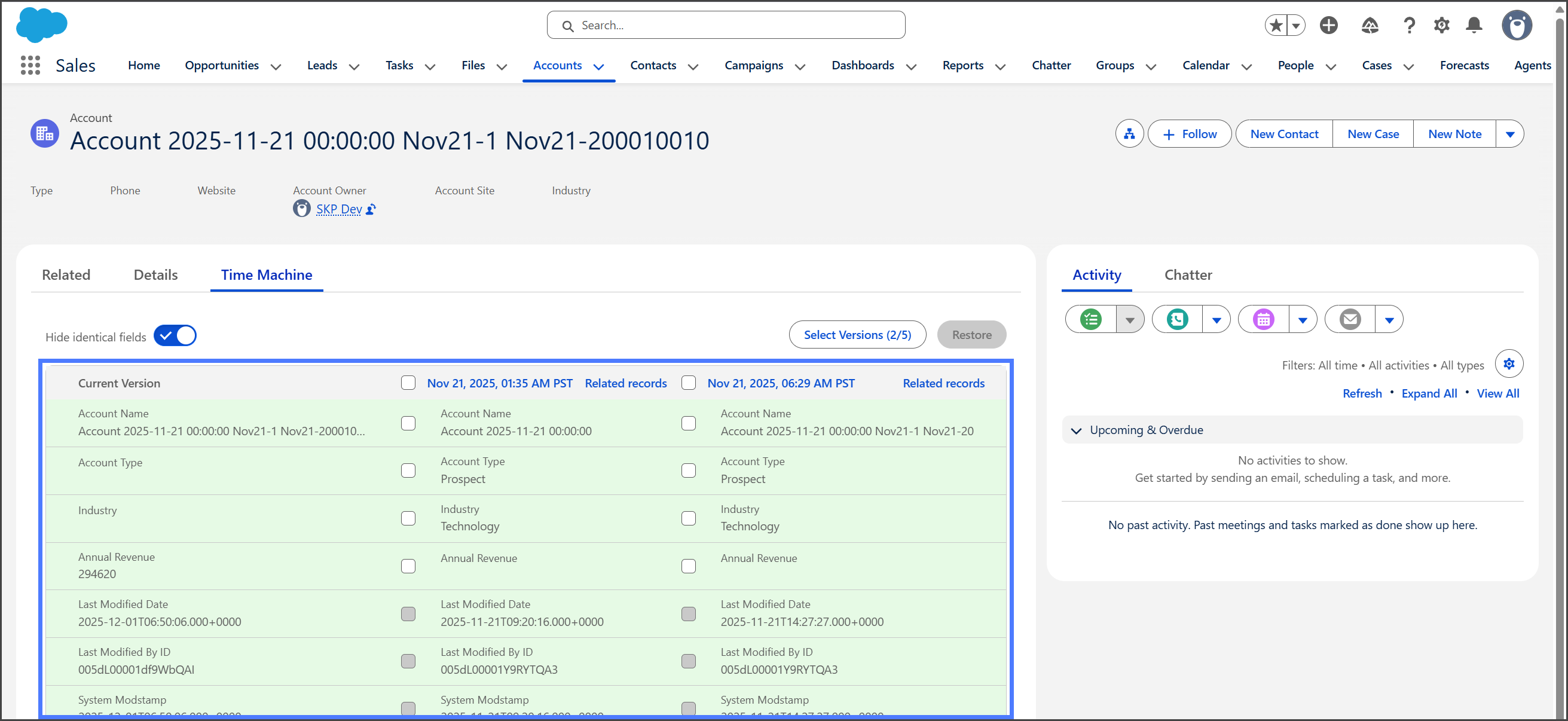
With the Time Machine component, you can choose up to five previous versions of the active record for comparison. After selecting one or more previous versions, you can restore any non-reference field.
{% hint style="info" %}
The values shown in the **Time Machine** tab reflect their value at the time you open the tab. If values change, you must refresh the page to view the updated values.
{% endhint %}
{% stepper %}
{% step %}
### Select Previous Versions
1. Open a Salesforce record.
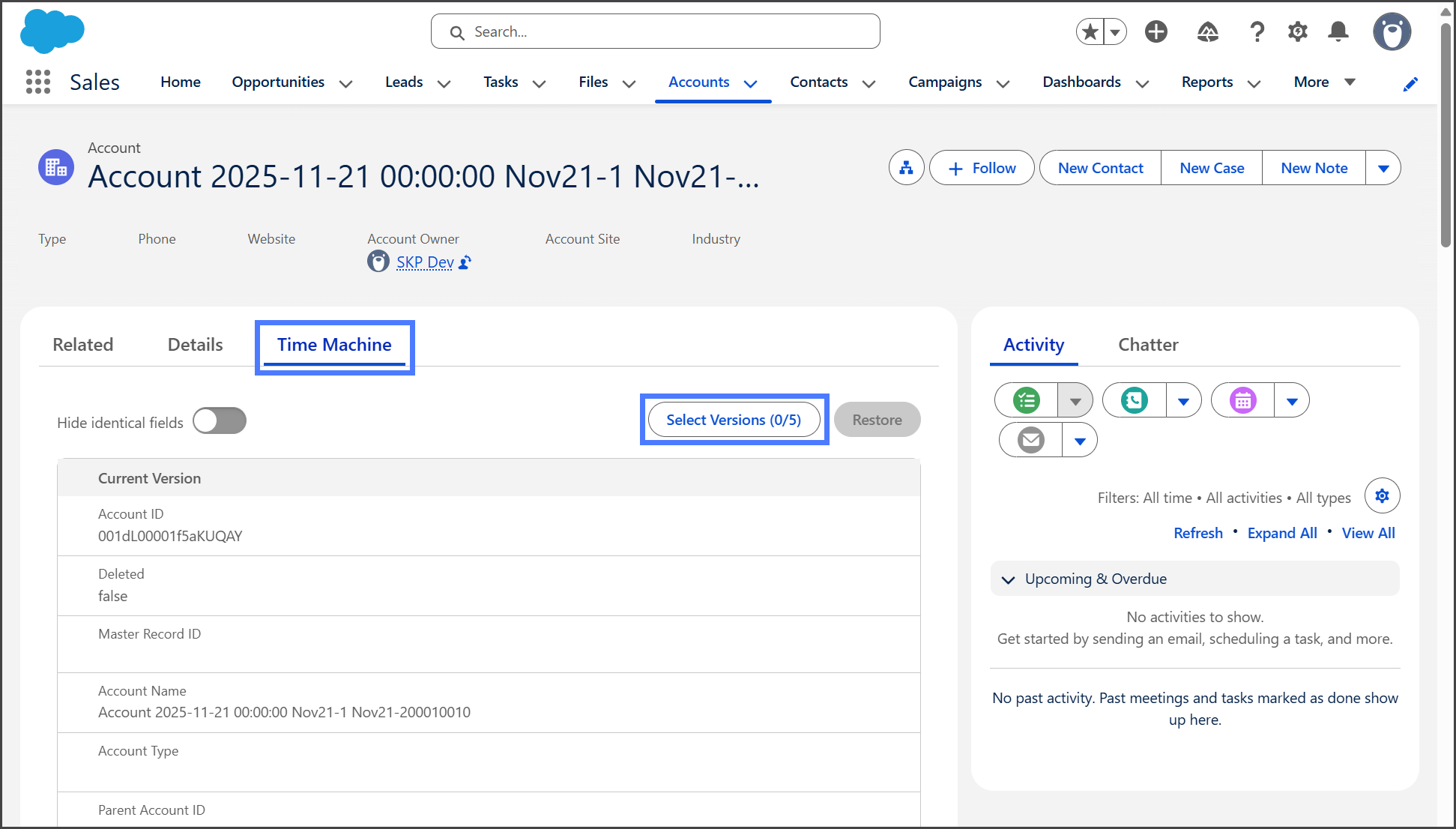
2. Click the **Time Machine** tab.
{% hint style="info" %}
If the **Time Machine** tab is not available, you must add it to your record page by following the instructions in the article below.
* [Adding Time Machine Component](/backup-and-archive/backup-and-archive-in-salesforce/time-machine/adding-time-machine-component.md)
{% endhint %}
3. Click **Select Versions**.
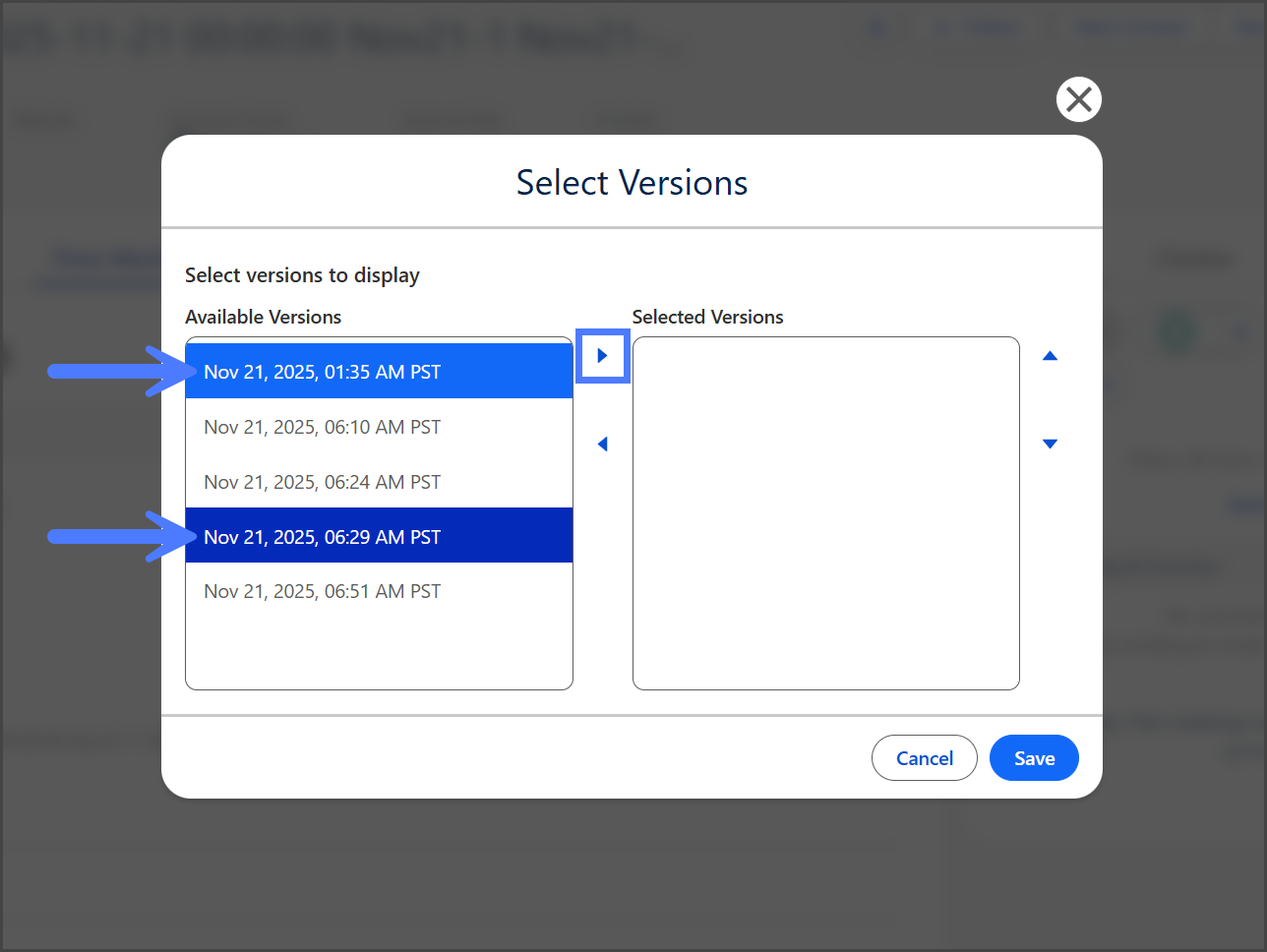
4. Click a version from the **Available Versions** list.
5. Click the **Right Arrow** to move the version to the **Selected Versions** list.
{% hint style="info" %}
You can select multiple versions at once by holding **Ctrl** while clicking.
{% endhint %}
6. Add up to 5 versions from the **Available Versions** list to the **Selected Versions** list.
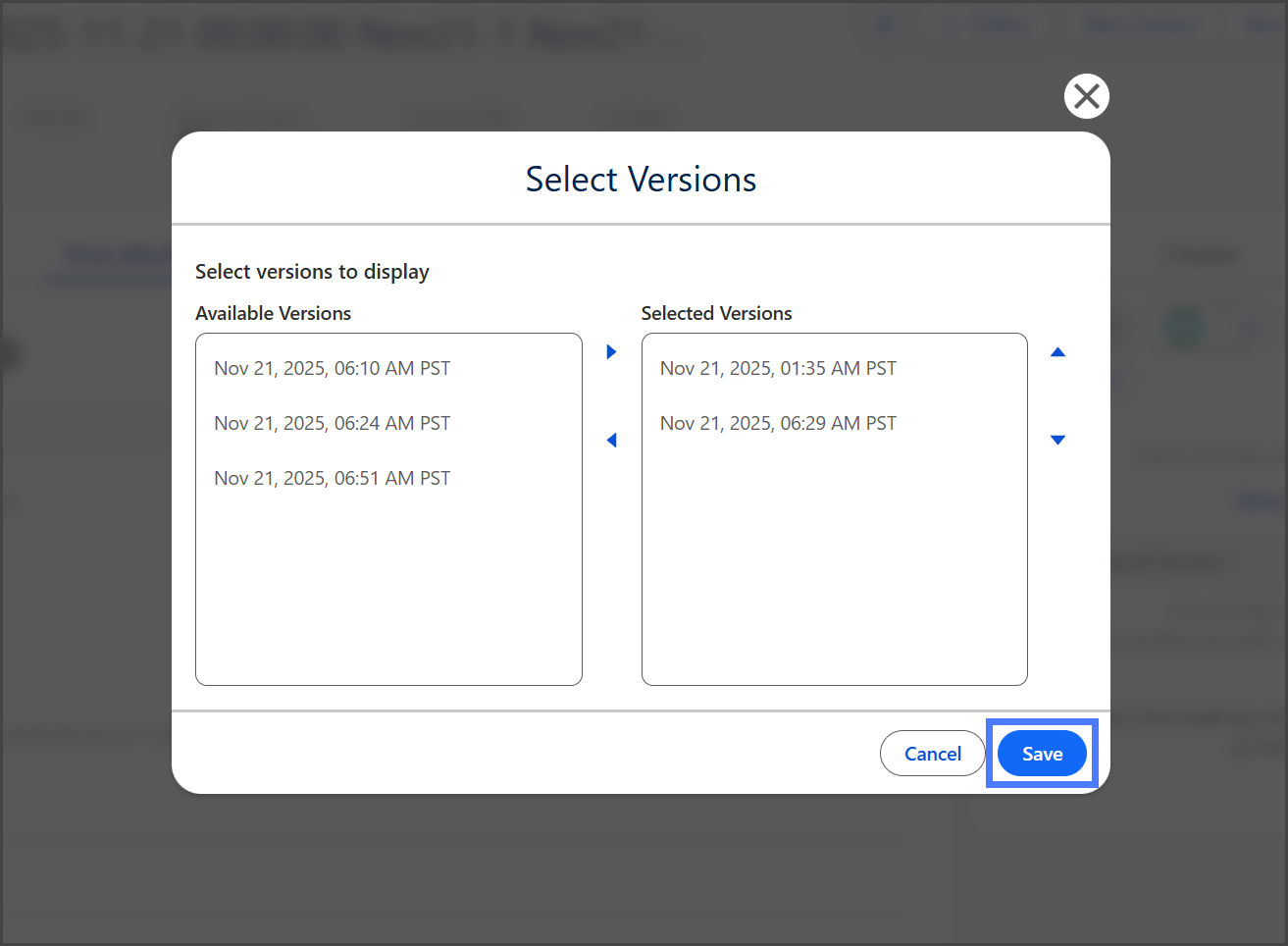
7. Click **Save**.
{% endstep %}
{% step %}
### Select and Restore Fields
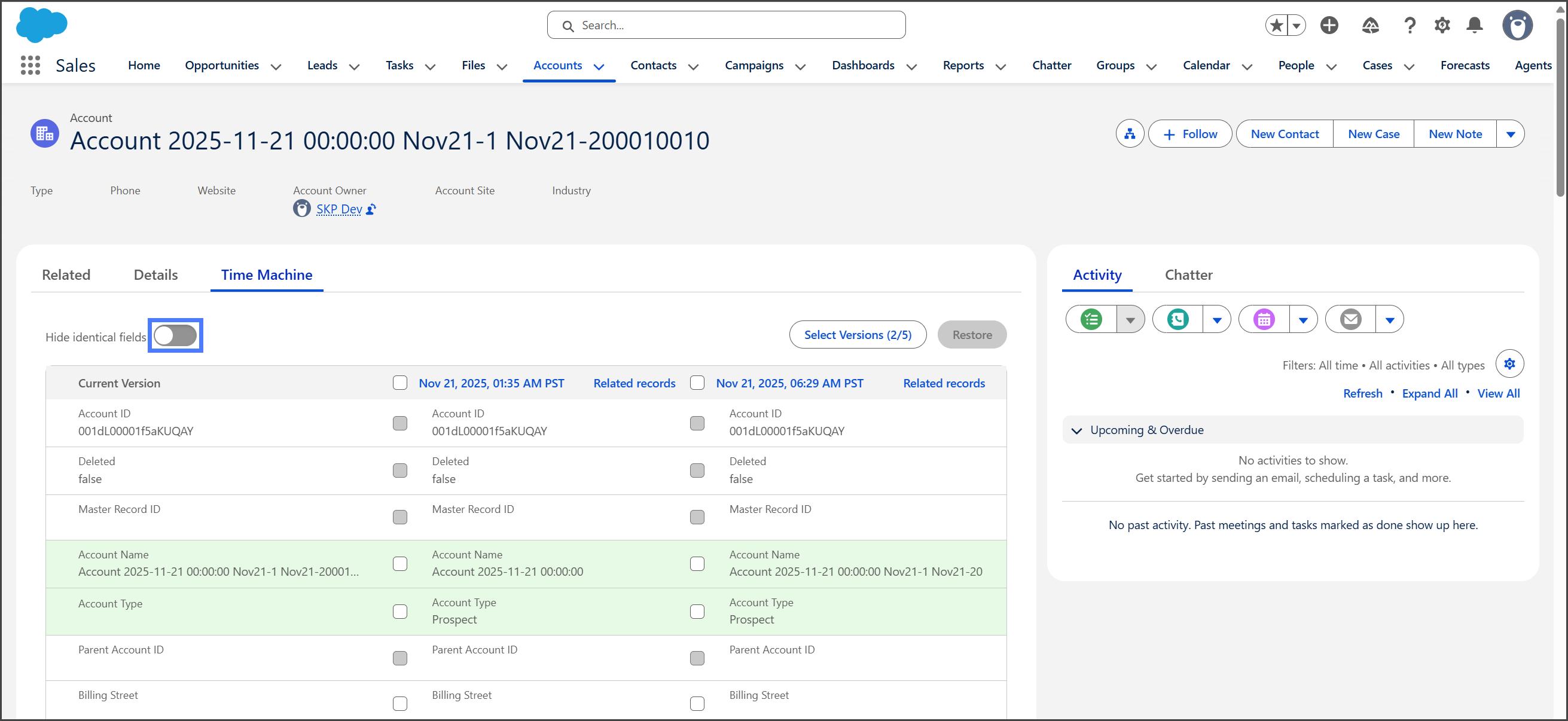
1. (Optional) Enable the **Hide identical fields** toggle to only show fields that have changed.
2. Compare the **Current Version** to all of the **Selected Versions**.
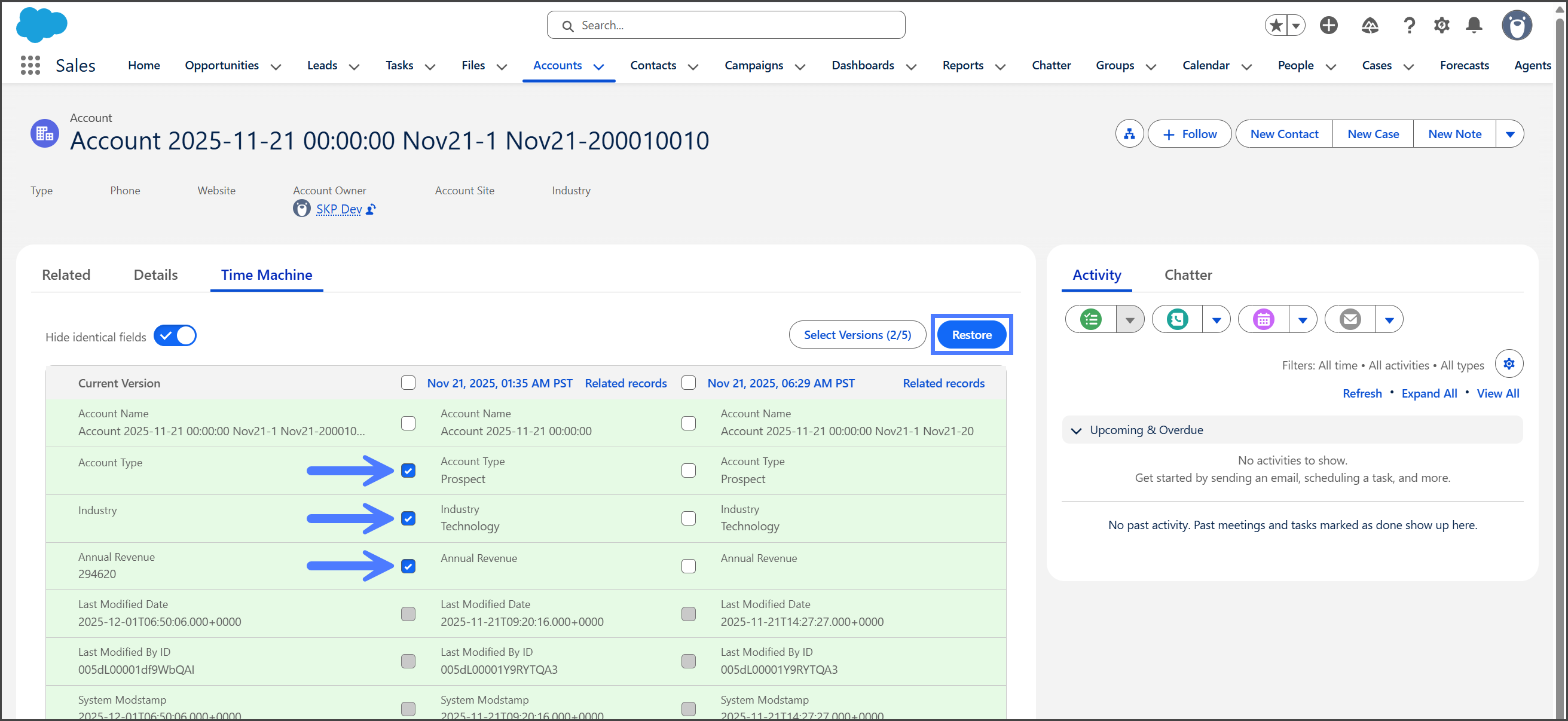
3. Select the fields to restore.
{% hint style="info" %}
Only non-reference fields are restorable. Fields with a greyed-out checkbox can't be restored.
{% endhint %}
4. Click **Restore**.
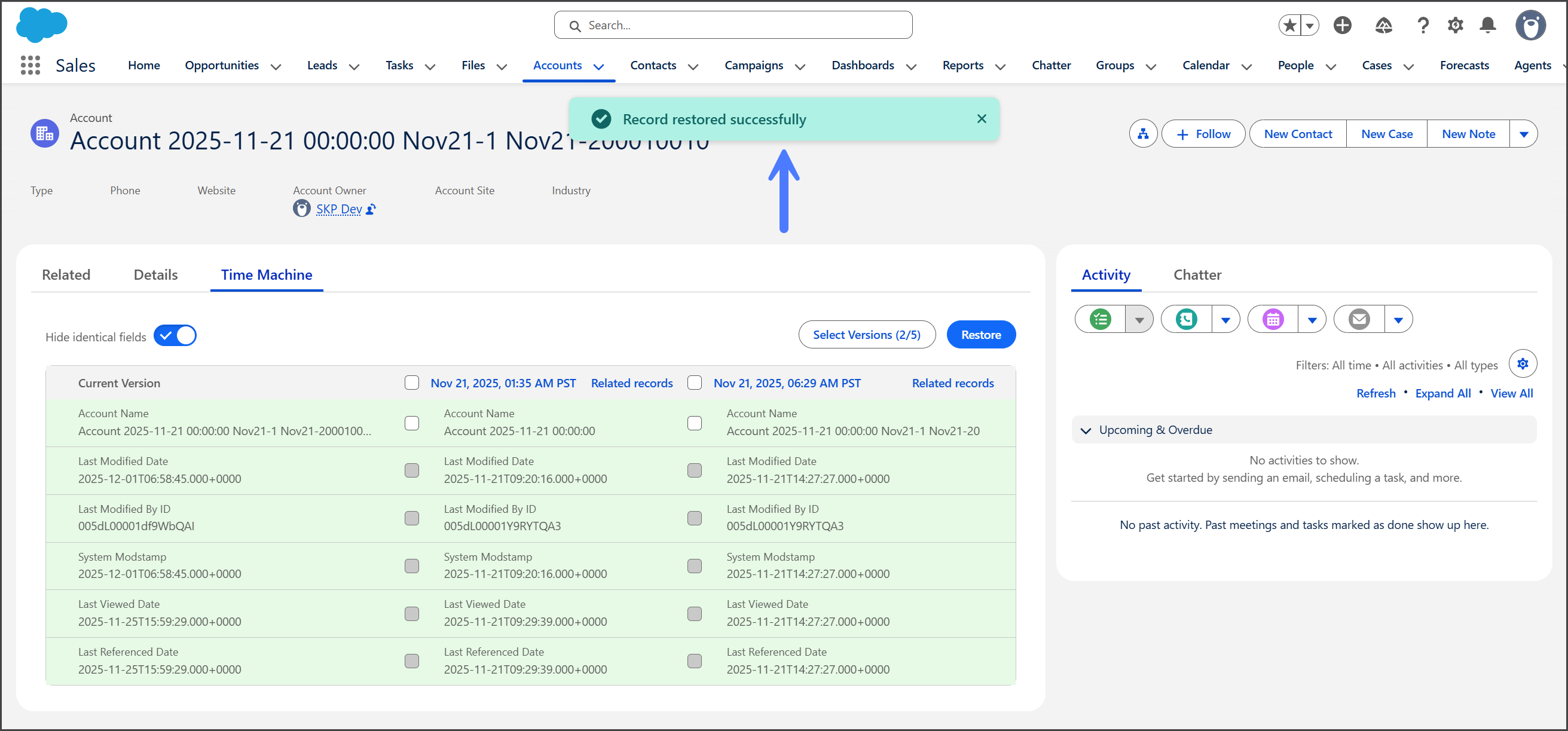
5. After the fields have been restored, you will see a **Record restored successfully** message.
{% endstep %}
{% endstepper %}
---
# Agent Instructions
This documentation is published with GitBook. GitBook is the documentation platform designed so that both humans and AI agents can read, navigate, and reason over technical content effectively. Learn more at gitbook.com.
## Querying This Documentation
If you need additional information that is not directly available in this page, you can query the documentation by asking a question.
Perform an HTTP GET request on the following URL with the `ask` and `goal` query parameters:
```
GET https://docs.flosum.com/backup-and-archive/backup-and-archive-in-salesforce/time-machine/restoring-records-with-flosum-time-machine-in-salesforce.md?ask=&goal=
```
`ask` is the immediate question: it should be specific, self-contained, and written in natural language.
`goal` is what the user is ultimately trying to achieve, the reason they need the answer. Sharing it helps GitBook give you a better, more relevant answer. A goal is most helpful when it describes the outcome the user wants rather than restating the question. For example, with `ask=how do I create an API token`, a goal like `automate deployments from our CI pipeline` lets GitBook tailor the answer to that use case.
The response will contain a direct answer to the question and relevant excerpts and sources from the documentation.
Use this mechanism when the answer is not explicitly present in the current page, you need clarification or additional context, or you want to retrieve related documentation sections.